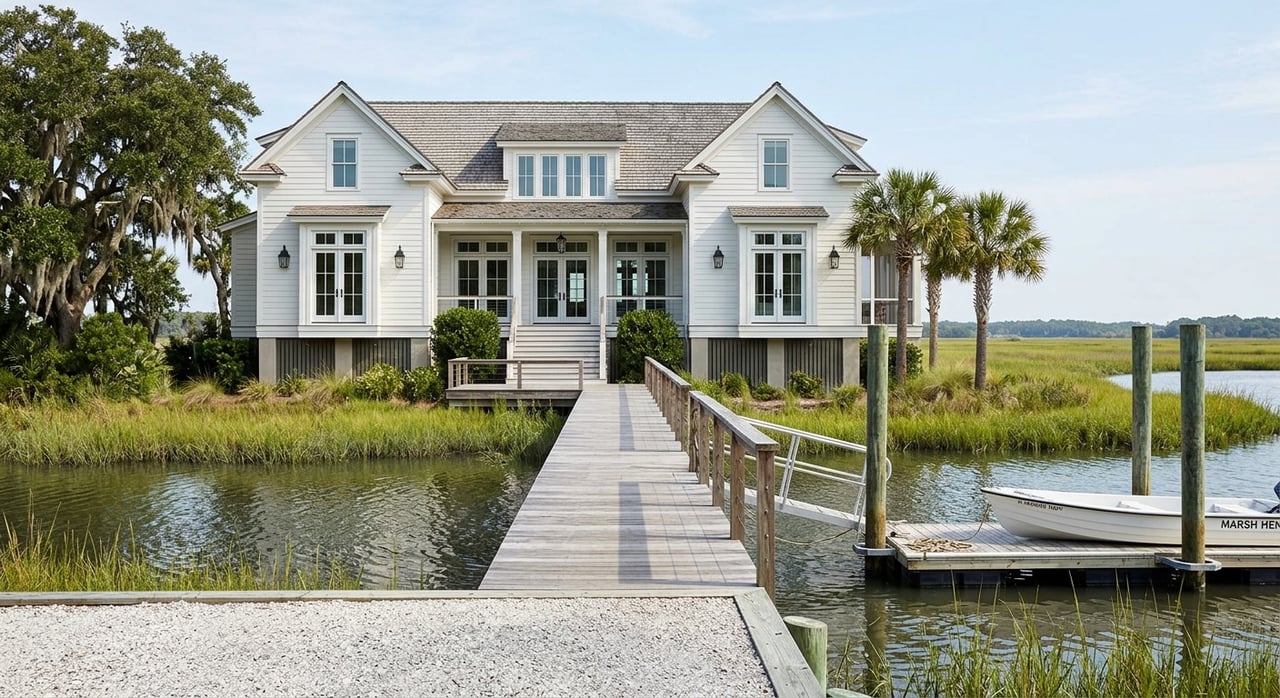
What does “waterfront” really mean in Charleston? If you are comparing marshfront, riverfront, and oceanfront homes, the answer can shape your daily routine as much as the home itself. On Charleston’s coastal islands, the view is only part of the story. Access, flood exposure, rental rules, and the feel of each island all matter. This guide will help you sort through the tradeoffs so you can focus on the waterfront lifestyle that fits you best. Let’s dive in.
What marsh, river, and ocean mean
In Charleston, waterfront labels usually describe the setting more than the street name. Marshfront often means tidal marsh or creek views, riverfront usually points to boating or paddle access, and oceanfront means direct Atlantic exposure. That difference matters because each setting creates a very different daily experience.
For many buyers, the real question is not just what you see from the porch. It is how you want to live. Do you want quick beach walks, a dock for boating, or quieter views with a broader natural backdrop? On Charleston’s islands, those choices often matter just as much as square footage or finishes.
Why the setting changes daily life
Charleston’s barrier islands each organize access in their own way. Some emphasize public beach use and commercial activity, while others lean toward private amenities, managed access, or a more residential pattern. That means two homes with similar marsh views can feel completely different depending on the island and community.
Flood exposure is also part of the waterfront decision. Sullivan’s Island notes that elevations range from sea level to about 14 feet, with oceanfront property in higher-risk VE zones and middle and marsh-side areas generally in AE zones. Isle of Palms says most property is in or very near a floodplain, and Seabrook notes exposure to flooding from the ocean, rivers, and tributaries.
Marshfront living in Charleston
Marshfront homes often offer the biggest sense of space. The views tend to open wide across tidal grasses, creeks, and sky, which can create a calmer and more private feel than many beach settings. If you want a waterfront backdrop without the constant activity of the ocean side, marshfront is often where buyers start to focus.
Marshfront living can also connect well with paddling and nature-oriented access. On Sullivan’s Island, the Station 26 kayak and canoe launch provides direct marsh access. On Kiawah and Seabrook, several communities highlight marsh vistas as part of a more private island experience.
The tradeoff is that marshfront is not the same as beach-at-your-door living. You may gain privacy and quieter scenery, but lose the simplicity of stepping straight onto the sand. For many relocation buyers, that is not a drawback at all. It is exactly the point.
Best buyers for marshfront homes
Marshfront often fits buyers who want:
- Quiet views and a stronger sense of privacy
- A broad natural setting with tidal creeks and wildlife
- Easy kayak or paddle access in some communities
- A more peaceful waterfront experience than a busy beach area
Riverfront living in Charleston
If your ideal day includes a dock, a kayak launch, or time on the water, riverfront may be the strongest fit. Riverfront homes and communities often center more on access than on surf and sand. That can make them especially appealing if boating convenience is high on your list.
Charleston’s islands show this clearly. Kiawah’s RiverView features marsh vistas plus a neighborhood pool, dock, and kayak launch on the Kiawah River. The Pointe also sits along the Kiawah River shoreline with a private dock and kayak launch. On Seabrook, Bohicket Marina provides access to both the Intracoastal Waterway and the Atlantic Ocean, while Folly’s backside includes river-focused access through Folly River Park and the community dock.
Riverfront also tends to bring a different rhythm. Many buyers love the sunset views, boating culture, and easier connection to creeks and inland waterways. If you picture your waterfront lifestyle around launching a boat or paddling after dinner, riverfront deserves a close look.
Best buyers for riverfront homes
Riverfront often fits buyers who want:
- Dock, marina, or launch access
- Boating or kayaking as part of everyday life
- Water views without full ocean exposure
- A balance between activity and a less beach-centered setting
Oceanfront living in Charleston
Oceanfront is the classic coastal dream. It gives you direct Atlantic exposure, immediate beach access, and the strongest sense of being truly on the coast. If your top priority is walking onto the sand every day, oceanfront is the clearest choice.
That said, oceanfront ownership also comes with the most exposure to wind, salt, sand, and shoreline management. Isle of Palms has an active beach restoration program, and Kiawah and Seabrook maintain beach management plans. Sullivan’s Island also identifies oceanfront parcels as being in VE flood zones, which is an important part of the decision.
For some buyers, none of that outweighs the view and access. For others, oceanfront feels best as a second home or a very specific lifestyle purchase. It is beautiful and iconic, but it is also the waterfront type where practical planning matters most.
Best buyers for oceanfront homes
Oceanfront often fits buyers who want:
- Direct beach access and Atlantic views
- A classic Charleston coastal setting
- A front-row beach lifestyle
- Comfort with shoreline exposure and ongoing management considerations
How each Charleston island feels
The same waterfront category can feel very different from island to island. That is why location matters just as much as whether a listing says marsh, river, or ocean.
Isle of Palms
Isle of Palms offers one of the most public-facing beach lifestyles in the area. The city highlights seven miles of beach, a Front Beach commercial district, and a marina with a public boat ramp. Housing ranges from condos and cottages to large oceanfront homes, with marsh, golf, ocean, and intercoastal views.
This island often appeals to buyers who want beach energy, boating options, and relatively easy access to Charleston. It has a lively mix of full-time and vacation-style living. If you want activity and flexibility, Isle of Palms can check a lot of boxes.
Sullivan’s Island
Sullivan’s Island feels more residential and preservation-minded. The town describes it as a three-and-a-half-mile barrier island near the entrance to Charleston Harbor, and most of the island is developed as single-family residential. Vacation rentals are prohibited in the residential district, which shapes the day-to-day feel in a meaningful way.
Beach access is quieter and more local, with 26 public beach access paths and marsh access at Station 26 for kayaks and canoes. The island has low commercial intensity and a strong neighborhood focus. Buyers often choose Sullivan’s when they want a more controlled and residential beach environment.
Folly Beach
Folly Beach is the most openly social beach town of the group. The city describes Folly as a six-mile island known for sea, sand, surfing, wildlife, and a strong sense of community. It also has a formal short-term-rental system with licensing, verification, and a waitlist.
Waterfront choices here include both ocean and river-oriented living. Folly River Park sits on the backside of the island and includes a community dock, while the boat, canoe, and kayak launch provides access to the Folly River and tidal marshes. If you want a true beach-town atmosphere with active public life, Folly stands out.
Kiawah Island
Kiawah offers a polished, luxury-resort setting with multiple waterfront options inside a private, amenity-rich environment. The island’s real estate materials highlight homes and villas set among the Atlantic Ocean, beach, marshlands, maritime forest, river, and fairways. Waterfront choices are highly neighborhood-specific.
Ocean Park offers layered views of marsh, river, ocean, and the Ocean Course. RiverView includes a dock and kayak launch, while oceanfront communities like Ocean Palms and Shipwatch focus more on direct beach access. Buyers who want privacy, structure, and a curated island lifestyle often gravitate to Kiawah.
Seabrook Island
Seabrook is a gated private community with nearly four miles of beach shoreline, nine boardwalks, and an oceanfront Beach Club. The island offers homes, cottages, townhomes, and villas with water, marsh, river, and oceanfront views. That gives buyers a wide range of waterfront settings within one private community.
Boat and paddle access are part of the lifestyle here. Bohicket Marina provides access to both the Intracoastal Waterway and the Atlantic Ocean, and several villa communities show how clearly Seabrook separates marsh, river, and ocean-oriented living. If you want a quieter private-island setting with strong amenity structure, Seabrook deserves attention.
Rules and access matter too
One of the biggest mistakes buyers make is focusing only on the view. In Charleston, community rules and access systems can shape your experience almost as much as the waterfront category itself. Rental regulations, club access, beach management, and dock or launch availability all affect how a property lives day to day.
Folly has a formal short-term-rental framework and waitlist. Sullivan’s residential district does not allow vacation rentals. Seabrook renters may need amenity cards for club access, and Kiawah membership access is tied to qualifying property ownership. Those details can have a real impact on how you use the home and what kind of atmosphere surrounds you.
A simple way to choose
If you are still deciding, start with the lifestyle you want most.
- Choose oceanfront if being on the beach every day is your top priority.
- Choose riverfront if boating, paddling, and dock access matter most.
- Choose marshfront if you want quieter views, more privacy, and a larger natural backdrop.
- Choose Folly Beach or Isle of Palms if you prefer a more active and public beach-town feel.
- Choose Sullivan’s Island if you want a quieter residential island setting.
- Choose Kiawah or Seabrook if you want a more private, club-oriented island experience.
Final thoughts on Charleston waterfront living
The right waterfront home is not just about what the listing calls it. It is about how you want your mornings, weekends, and seasons to feel once you are there. In Charleston, a marshfront home in a private island community can live very differently from a marshfront home in a public beach town, even before you factor in flood zone, elevation, or access.
That is where local guidance makes a difference. If you are weighing waterfront options across Charleston’s islands, Amy Bolan can help you compare the lifestyle, property considerations, and community details that matter most for your move.
FAQs
What does marshfront mean for Charleston waterfront homes?
- Marshfront usually means tidal marsh or creek views, often with a quieter setting, more privacy, and in some areas access to paddling or marsh-side launches.
What does riverfront mean for Charleston waterfront living?
- Riverfront usually points to boating, dock, or kayak access and often fits buyers who want to spend more time on the water than on the beach.
What does oceanfront mean on Charleston’s barrier islands?
- Oceanfront means direct Atlantic exposure and immediate beach access, along with more exposure to wind, salt, sand, and shoreline management.
Which Charleston island feels most active for waterfront buyers?
- Folly Beach and Isle of Palms are generally the most active and public-facing beach-town options in this group.
Which Charleston island feels most residential for waterfront buyers?
- Sullivan’s Island is known for a more residential, preservation-minded feel with lower commercial intensity and strong neighborhood controls.
Which Charleston islands offer private resort-style waterfront living?
- Kiawah Island and Seabrook Island are both known for private, amenity-rich, club-oriented waterfront environments.
Why do flood zones matter for Charleston waterfront homes?
- Flood zones matter because Charleston’s waterfront islands are barrier-island environments, and exposure can vary by location, elevation, and whether a property sits on the ocean side, marsh side, or elsewhere on the island.
Why do community rules matter for Charleston waterfront buyers?
- Community rules can affect rentals, access to amenities, beach use, and how private or public your day-to-day waterfront experience feels.