If you have started browsing Charleston waterfront homes, you have probably noticed that one simple word, waterfront, can mean very different things. A property on the Atlantic beach offers a very different experience from one facing salt marsh or a tidal creek, even though all of them may be marketed as being on the water. When you understand the terms, you can compare homes more clearly, ask better questions, and avoid surprises. Let’s dive in.
Why Charleston Waterfront Can Be Confusing
Charleston’s waterfront is shaped by an estuary system, not just by the ocean. In Charleston Harbor, seawater mixes with freshwater, and tidal creeks connect to tidal rivers, sounds, bays, and harbors before reaching the Atlantic.
That matters because two homes can both be called waterfront while offering completely different views, access, and day-to-day use. One may give you direct beach access, while another may overlook marsh grass with changing tides and limited boating access.
Charleston Waterfront Is Not One Category
In plain English, Charleston waterfront usually falls into a few common buckets. These terms are helpful, but they are not interchangeable.
- Oceanfront = direct Atlantic beach frontage
- Riverfront = frontage on a tidal river or harbor-connected waterway
- Marshfront = frontage on salt marsh
- Tidal creek = frontage on a smaller tide-driven marsh channel
- Dockable water = a property with a realistic path to an approved dock or water-access structure
The key takeaway is simple: the view is only one part of the story. Tides, flood standards, and permitting often matter just as much.
What Oceanfront Usually Means
Oceanfront In Charleston
In Charleston, oceanfront usually means Atlantic-facing frontage on a barrier island beach. South Carolina’s front beaches fringe the shoreline and barrier islands, which is why oceanfront generally refers to places like the barrier-island beachfront rather than a mainland river edge.
For you as a buyer, oceanfront often means direct beach access and the most traditional surf-and-sand lifestyle. It also means closer interaction with dunes, erosion concerns, and coastal permitting rules tied to beach and dune systems.
What Buyers Should Keep In Mind
A beautiful beachfront setting can feel straightforward at first glance, but it often comes with added layers of review. Beach and beach-dune systems are regulated critical areas in South Carolina, and setback authority can affect what is possible on a property.
That does not make oceanfront less desirable. It simply means you should pair the dream view with practical questions about flood zone, elevation, and site constraints.
What Riverfront Usually Means
Riverfront In Charleston
Riverfront in Charleston often means frontage on a tidal river or another harbor-connected waterway. Because Charleston sits within an estuary system, these are often not quiet inland freshwater rivers. They are part of a tide-influenced coastal network.
For many buyers, riverfront suggests broader water views and a stronger boating focus than marsh-only frontage. Still, the usefulness of the water can vary based on tide, water depth, and whether a dock can actually be permitted.
Why Tides Matter On Riverfront Lots
Charleston’s average high-tide range is about 5.5 feet, and king tides can reach 7 feet or higher. That means the same riverfront property can look and function differently depending on the tide cycle.
A dock, launch point, or shoreline edge that seems ideal at one time of day may feel very different a few hours later. If boating is high on your list, riverfront should always be evaluated with tide and dock questions in mind.
What Marshfront Usually Means
Marshfront In Charleston
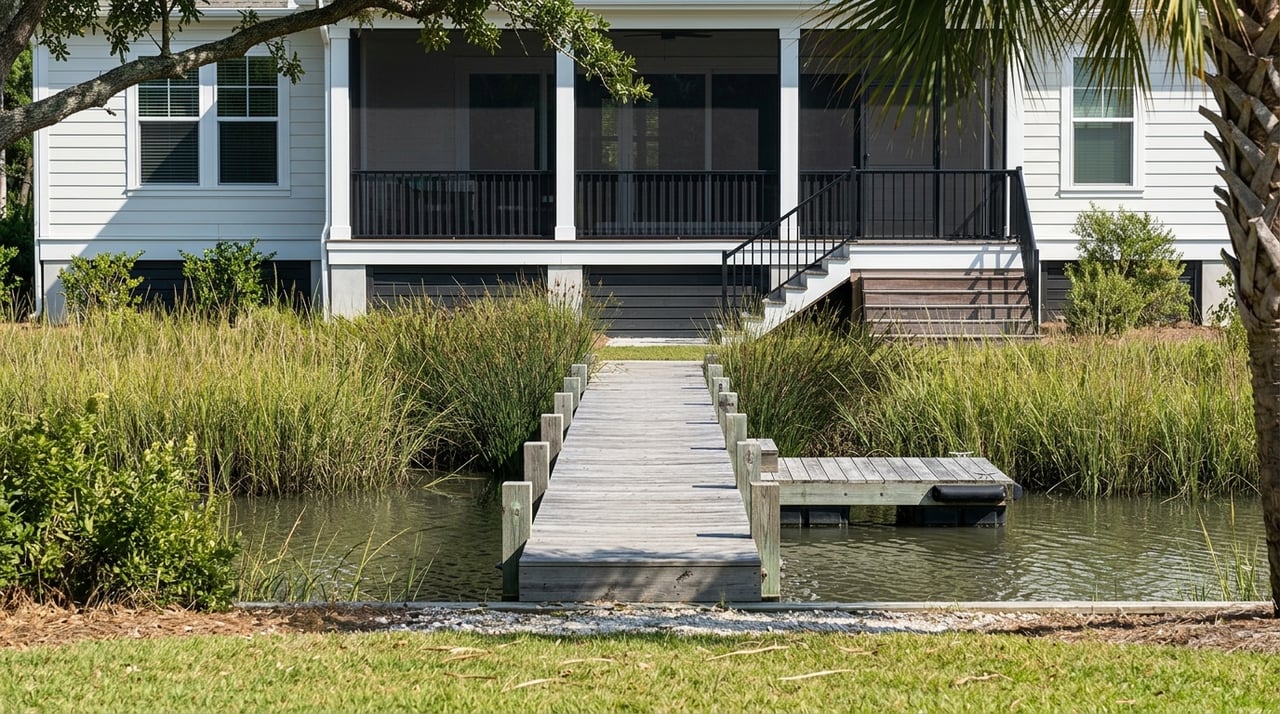
Marshfront usually means a property faces salt marsh rather than open water. Salt marsh is an intertidal habitat that changes with the tide and plays an important role in the coastal environment.
For many buyers, marshfront offers wide views, abundant wildlife, and a quieter sense of privacy. It often feels more natural and buffered than exposed ocean frontage.
The Marshfront Tradeoff
Marshfront can be beautiful, but it does not automatically mean direct boating or beach access. In many cases, the appeal is more about scenery, light, and the changing landscape than about launching a boat from your backyard.
If your priority is peaceful views and a strong connection to the Lowcountry landscape, marshfront may be exactly what you want. If your priority is direct water recreation, you may need to look more closely at riverfront or a property with existing, permitted water access.
What Tidal Creek Usually Means
Tidal Creek In Charleston
Tidal creeks are smaller estuarine channels that intersect marsh habitat. Some can be nearly dry at low tide, and their water levels can change dramatically over the course of a day.
In listings, tidal creek usually points to a narrower and more intimate water setting. Many buyers love tidal creek properties for kayaking, wildlife viewing, and the tucked-away Lowcountry feel.
Why Tidal Creek Access Can Change Fast
The charm of a tidal creek is tied directly to the tide. Because navigability can shift a lot between high and low tide, you should never assume that a launch or small-craft access will work at all hours.
If you are considering a tidal creek property, checking the relevant tide table early is a smart step. It can help you understand whether the water matches the way you plan to use it.
What Dockable Water Really Means
Dockable Water Is Not Automatic
Dockable water is common buyer shorthand, but it is not a formal legal category. In practice, it means a property may have a realistic path to a dock that is both physically workable and legally permitted.
That distinction matters. A lot may touch the water and still not support the kind of dock or access structure you had in mind.
What A Buyer Should Verify
In South Carolina’s coastal zone, critical areas include coastal waters, tidelands, beaches, and beach-dune systems. New dock work is handled through the state permitting process, and dock master plans can help guide eligibility, but they do not guarantee a permit.
SCDES also measures creek width from marsh grass to marsh grass and uses width thresholds that can limit dock size. So if a listing mentions dockable water, you should treat that as a starting point for due diligence, not a final answer.
How These Terms Affect Your Daily Life
Lifestyle Differences
The most practical differences between waterfront categories usually come down to lifestyle, access, and risk. Oceanfront often prioritizes beach access and horizon views. Riverfront often leans more toward boating and wider water views.
Marshfront usually highlights privacy, natural scenery, and a softer shoreline setting. Tidal creek frontage often appeals to buyers who want a quieter, more tucked-away water experience.
Access Differences
The same word, waterfront, can create very different expectations. One home may support direct beach walks, another may support boating at certain tides, and another may be best appreciated for the view alone.
That is why it helps to define your priorities before you tour. If your must-have is boat access, your search criteria should be different from someone focused on beach access or marsh views.
Flood Zones Matter As Much As The View
Read The Label With Flood Data
Charleston County notes that the county’s greatest flood threat is hurricane storm surge from the Atlantic Ocean. Waterfront labels should always be read together with flood-zone and elevation information.
Coastal Special Flood Hazard Areas include Zones VE, AE, and AO, and coastal high-hazard areas are Zones V and VE. Charleston County can also tell buyers whether a property is in a flood zone, whether it is in Coastal A, and whether it falls in a mapped repetitive-loss area or COBRA zone.
Coastal A Can Change The Picture
Charleston County notes that Coastal A, or LiMWA, areas are treated to the same construction standards as V and VE zones as part of local flood-mitigation goals. That means two properties with similar views may have different construction requirements and insurance implications.
This is especially important for oceanfront properties and some more exposed river or creek sites. A pretty setting does not tell you the whole risk picture.
Four Questions To Ask Early
A strong Charleston waterfront search gets easier when you ask a few practical questions at the beginning. These questions can quickly clarify whether a property fits your goals.
- What kind of water is it?
- Is the water tidal?
- Can a dock actually be permitted?
- What flood zone applies?
These four questions can save you time and help you compare properties on a more realistic basis.
Smart Follow-Up Questions For Waterfront Tours
Once a home makes your short list, go one level deeper. Useful follow-up questions include:
- Is there an existing dock?
- Is the existing dock permitted?
- Is there a shared dock or dock master plan?
- Is an elevation certificate available?
- Is the lot inside a beachfront jurisdictional line?
- Is the property in a coastal high-hazard zone?
These questions matter because permit pathways, flood standards, and actual water access can vary from one parcel to the next. In Charleston, that detail work is where informed buying decisions happen.
A Simple Way To Think About Charleston Waterfront
If you want the easiest possible framework, think about Charleston waterfront in terms of use. Oceanfront is usually about the beach. Riverfront is often about bigger water and boating. Marshfront is often about scenery and privacy. Tidal creek is often about a smaller-scale, tide-driven connection to the water.
Then add one more filter: can you use the water the way you want to use it? That is where tide range, flood-zone information, and dock eligibility become essential.
Buying waterfront in Charleston can be incredibly rewarding when you understand what you are seeing. If you want experienced guidance on how waterfront terms translate into real-world buying decisions, Amy Bolan can help you evaluate the details with clarity and confidence.
FAQs
What does oceanfront mean for Charleston buyers?
- Oceanfront in Charleston usually means direct Atlantic-facing frontage on a barrier island beach, with strong beach access but added exposure to dune, erosion, and permitting considerations.
What does riverfront mean in Charleston real estate listings?
- Riverfront usually means frontage on a tidal river or harbor-connected waterway, which may offer broader views and boating potential depending on tide, depth, and dock eligibility.
What does marshfront mean for a Charleston home search?
- Marshfront usually means a property faces salt marsh instead of open water, often offering broad natural views, wildlife, and a more buffered setting.
What is a tidal creek on a Charleston waterfront property?
- A tidal creek is a smaller estuarine channel that intersects marsh habitat, and its water levels and navigability can change significantly with the tide.
What does dockable water mean in Charleston?
- Dockable water is buyer shorthand for a property that may have a realistic path to an approved dock or water-access structure, but it does not guarantee a permit.
Why do flood zones matter for Charleston waterfront homes?
- Flood zones matter because waterfront labels do not explain storm surge exposure, construction standards, or insurance implications, all of which can vary by parcel.
What should Charleston waterfront buyers ask before touring a property?
- Buyers should ask what kind of water the property has, whether it is tidal, whether a dock can actually be permitted, and what flood zone applies.