Thinking about buying a vacation rental on Folly Beach? It can be an exciting way to enjoy the coast while creating income potential, but Folly is not a market where you can buy first and sort out the details later. Between licensing limits, flood standards, parking rules, and seasonal demand, the right property can look very different from the prettiest one online. This guide will help you understand what matters most before you buy, so you can make a smarter decision with fewer surprises. Let’s dive in.
Why Folly Beach draws vacation rental demand
Folly Beach is one of the best-known beach destinations in the Charleston area, with nearly 1.5 million visitors each year. That steady stream of visitors helps explain why vacation rental ownership stays on so many buyers’ radar.
Demand is not limited to peak summer weeks. The city’s visitor information shows many annual festivals happen between early fall and early spring, which supports shoulder-season traffic beyond the traditional beach months.
Weather patterns also shape the rental calendar. NOAA data for nearby Charleston shows average monthly temperatures rising from about 50.8°F in January to 82.3°F in July, with the wettest month historically in August. In practical terms, late spring through early fall is usually the strongest stretch, while festivals and mild winter weather can still support off-season stays.
Why licensing matters first
On Folly Beach, the rental license can be just as important as the house itself. If you are shopping for a property with short-term rental goals, this is one of the first issues to verify.
The city requires a business license for any business activity inside city limits, and existing licenses must be renewed each year. For short-term rentals, the city handles renewals directly, with annual deadlines of April 30 for business licenses and June 1 for registration renewals.
Folly Beach recognizes several rental categories, including long-term rentals of 30 or more days, owner-occupied short-term rentals, investor short-term rentals, and certain provisional licenses tied to post-closing situations. The category matters because it affects taxes, use, and what you may be able to do after closing.
The biggest issue for many buyers is this: rental licenses do not transfer to a new owner. The city also says the investor short-term rental waitlist is not open, and no new investor licenses are projected for the next business license year. That means a property’s past rental use does not automatically guarantee the same path for you.
If you plan to buy an existing rental, the city notes that a provisional license may allow certain post-closing rentals for up to 90 days while the buyer works through compliance under the South Carolina Vacation Rental Act. That can be helpful in the right situation, but it is not a substitute for careful due diligence before you buy.
Understand the tax setup before you commit
Tax treatment on Folly Beach depends in part on how the property is used. The city says owner-occupied short-term rentals may qualify for the 4% property tax rate, while investor short-term rentals are taxed at the 6% rate.
There is also an important threshold for owner-occupied properties. If an owner-occupied property is rented for more than 72 days in a calendar year, the owner may lose the 4% rate. For buyers comparing second-home use with full investment use, this can affect the long-term math.
Short-term rental operators also need to plan for lodging-related taxes and fees. The city says owner-occupied and investor short-term rental holders must pay sales and accommodations taxes, and Charleston County levies a 2% accommodations fee on transient room accommodations.
If bookings are handled directly, the South Carolina Department of Revenue says the owner needs a retail license to file and pay accommodations tax. If a property management company or online travel company handles the booking and payment, that party may be responsible instead. This is one reason your management strategy should be part of your buying plan, not an afterthought.
What property types fit Folly best
Not every beach property is equally practical for vacation rental ownership. Folly Beach’s zoning and physical standards shape what tends to work best.
The city’s dimensional standards are fairly tight. Single-family dwellings require a minimum lot area of 10,500 square feet per dwelling, at least 70 feet of lot width, 10-foot front and rear setbacks, a 35% maximum lot coverage on high ground, and one off-street parking space per bedroom. Two-family dwellings are allowed at 5,250 square feet per dwelling under the same general framework.
The beach management plan adds another key point for beachfront property. Minimum lot size on beachfront parcels has doubled to 10,500 square feet, and multifamily development is no longer an allowable use on beachfront properties. That tends to favor detached homes and smaller duplex-style layouts over larger multifamily formats.
For many buyers, the most practical vacation rental candidates are already-improved homes that align with current standards. A home with a clear legal bedroom count, enough off-street parking, and an established layout often creates fewer headaches than a property that looks like a future project.
Flood and elevation are central on Folly Beach
Flood risk is not a side issue on Folly Beach. It is part of owning property on the island.
The city says the entire city sits within a flood hazard area, and Folly Beach enforces V-zone standards throughout the city. New or substantially improved structures must be elevated at least one foot above base flood elevation.
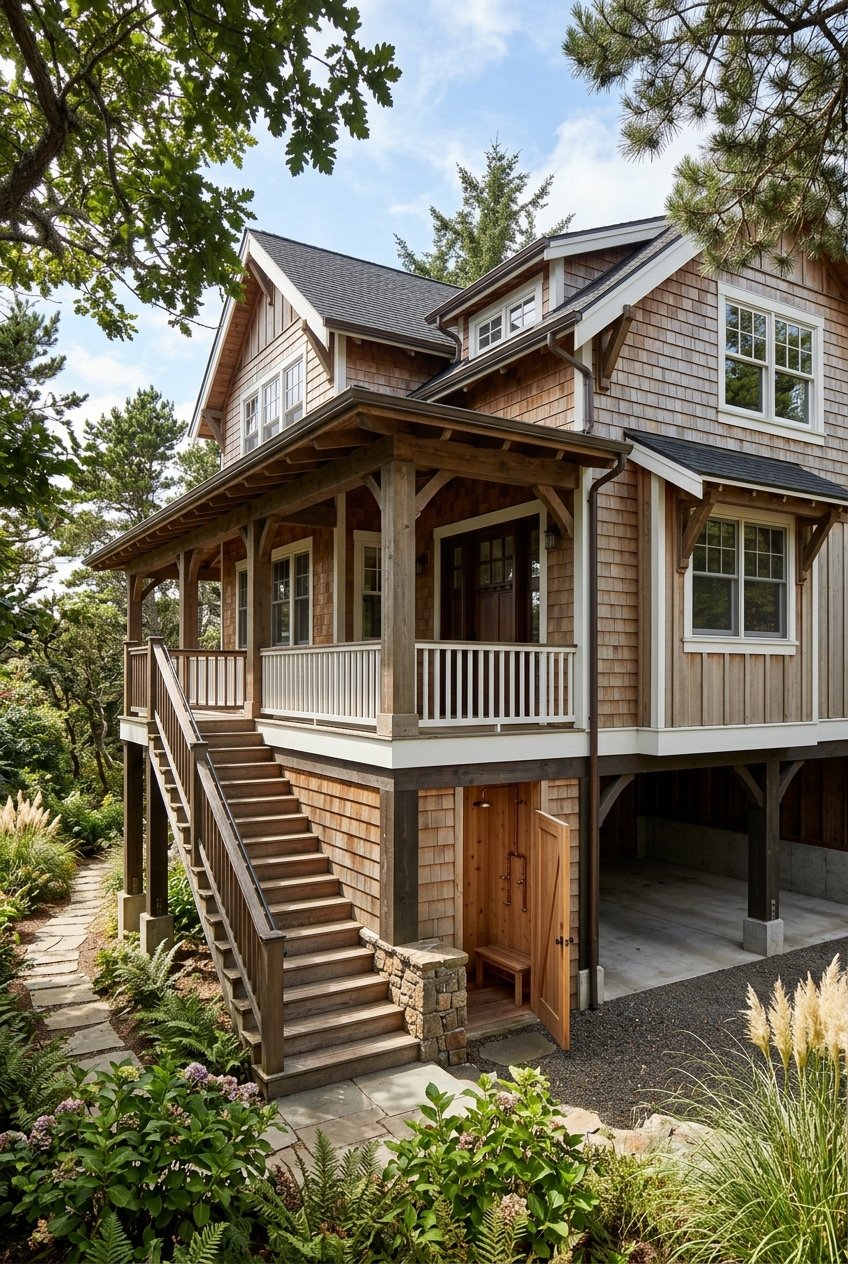
That rule affects how homes are built and used. Areas below that elevation are generally limited to access, vehicle parking, and limited storage, which is why many Folly Beach homes have elevated living areas above ground-level parking or storage space.
Flood insurance also needs separate attention. The city states that flood insurance is separate from homeowners insurance, so buyers should factor that into carrying costs from the beginning.
Long-term resilience also matters. Folly 2050 projects sea level rise of at least 1.6 feet by 2050, and the city’s beach management plan identifies chronic erosion as the largest beach-management challenge, along with periodic renourishment efforts. For buyers, this means due diligence should include not only today’s flood setup, but also how the property fits your longer-term ownership plans.
Parking can make or break guest experience
A vacation rental can look great on paper and still perform poorly if guests struggle with parking. On Folly Beach, this issue deserves more attention than many buyers expect.
The city strictly enforces parking rules. Guests may not park in roadways, block driveways, park on sidewalks or dunes, or park diagonally unless posted.
That matters because the city also requires one off-street parking space per bedroom under its dimensional standards. If the home’s bedroom count and parking setup do not line up cleanly, you may face operational problems right away.
When you are comparing homes, think about parking from the guest’s point of view. A property with easy, legal off-street parking is often much easier to manage than one that forces guests to guess where their cars can go.
Beach rules shape the rental experience
Successful vacation rental ownership is not just about buying the right property. It is also about setting the right expectations for guests.
Folly Beach has strict public beach rules. The city prohibits alcohol on the beach, smoking on the beach and beach accesses, glass, plastic, balloons, styrofoam, open fires, fireworks, and holes deeper than one foot.
There are also seasonal rules that can affect visitors. Dogs are restricted from the beach from 10 a.m. to 6 p.m. between May 1 and September 30, and no lights may illuminate the front beach from May 1 to October 31 because of sea turtle protection.
These are not minor suggestions. The city says ordinance violations can carry fines up to $1,092. Owners who provide clear, simple house instructions are often better positioned to protect the property and reduce guest issues.
Special events have limits too
Some buyers picture using a vacation rental for large celebrations or event-driven stays. On Folly Beach, that plan needs to stay within local rules.
The city says special events in short-term rentals may not exceed 25 people. Outdoor amplified music is not allowed, and any vendors used for the event must hold Folly Beach business licenses.
This does not mean event-oriented rentals are impossible. It does mean the property should be marketed and managed with realistic expectations, especially if you want to avoid neighbor complaints or ordinance problems.
Renovation plans need a reality check
It is easy to look at a beach house and think, “I’ll just add a bedroom later.” On Folly Beach, that kind of change can trigger more review than buyers expect.
If you want to expand or increase bedroom count, the city says the rental license must be updated. The owner must also provide proof of parking, updated tax records, and septic capacity.
The building department also notes that permit review for large projects can take weeks. If your investment strategy depends on renovations, be sure your timeline and budget leave room for permitting and compliance review.
What strong Folly rental candidates usually share
If you want to reduce friction, the best candidates often share a few common traits. These homes may not be identical, but they tend to fit the city’s rules and the realities of coastal ownership better than others.
Look for these practical strengths:
- An already-elevated home
- A legal and clearly documented bedroom count
- Enough off-street parking for the bedroom count
- A verified rental license history
- A clear flood insurance and resilience plan
- A layout that works well for beach guests without requiring major reconfiguration
In many cases, the most valuable property is the one with the fewest unknowns. That is especially true in a market where licensing, parking, and flood requirements can affect both income potential and ease of ownership.
How to buy more strategically on Folly Beach
If you are serious about owning a vacation rental on Folly Beach, your buying process should be more detailed than a typical second-home search. The goal is not just finding a home you like. The goal is finding a property that fits your use plans, risk tolerance, and local rules.
A smart review process usually includes:
- Confirming the current and historical rental license status with the city
- Reviewing property tax classification and planned use
- Checking off-street parking against legal bedroom count
- Understanding flood zone requirements, elevation, and insurance costs
- Evaluating whether any future renovation plans are realistic under city rules
- Reviewing how bookings and tax collection would be handled if you self-manage or hire management help
This is where local market knowledge matters. On a coastal island like Folly Beach, small details can have a big impact on how smoothly a property performs after closing.
If you are weighing a Folly Beach purchase for personal use, part-time rental income, or long-term investment goals, working with an advisor who understands island inventory, licensing issues, and coastal due diligence can save you time and protect you from expensive mistakes. If you want experienced, local guidance as you explore your options, connect with Amy Bolan.
FAQs
What should buyers verify before buying a Folly Beach vacation rental?
- Buyers should verify rental license status, property tax classification, legal bedroom count, required off-street parking, flood elevation details, and expected insurance costs before closing.
Can a short-term rental license transfer with a Folly Beach home sale?
- No. The City of Folly Beach says rental licenses do not transfer to a new owner.
What taxes apply to a Folly Beach short-term rental?
- Folly Beach short-term rentals may involve property tax classification issues, sales and accommodations taxes, and Charleston County’s 2% accommodations fee, depending on how the property is used and booked.
What type of property works best as a Folly Beach vacation rental?
- In many cases, the strongest candidates are already-elevated homes with a legal bedroom count, enough off-street parking, and a verified rental license history.
Do Folly Beach guests need to follow specific beach rules?
- Yes. The city enforces rules on alcohol, smoking, glass, fires, fireworks, dog hours, beach lighting, and more, and violations can carry fines.
Can owners expand a Folly Beach rental later?
- Sometimes, but adding bedrooms or expanding a home can require updated rental license information, proof of parking, updated tax records, septic capacity review, and time for permit review.