Stand at the fountain in Hutchinson Square on a Thursday evening and you can see it without walking anywhere. Down West Luke Avenue, a Victorian-turned-French-bistro is filling with the after-work crowd. Across the street from it, a rustic Italian spot with a wood-fired oven is doing the same. A few blocks over on Cedar Street, an 1873 house with eleven-foot ceilings is pulling in the coffee crowd before it shifts to wine in the evening. And on East 1st North Street, a century-old property is plating fish and frites to a room that used to be somebody's parlor.
None of these are new buildings. That is the part worth sitting with. Four of downtown Summerville's most talked-about restaurants opened inside houses that were standing before most of the people eating in them were born, and they opened within walking distance of each other, in the span of about four years.
Four Houses, One Loop
If you tried to visit all four in an afternoon, you would not need a car.
- Kersey House, 117 W. Luke Ave., a circa-1912 home restored by South Carolina's only French Master Chef, Nico Romo, opened as a bistro and event venue in February 2025, according to The Post and Courier.
- Laura, directly across the street from Kersey House, Romo's rustic Italian concept and the third restaurant in his hospitality group, opened in spring 2022.
- Odd Duck Market, 117 S. Cedar St., an 1873 Victorian that owners Jared Hellman and Andrew Hare restored as their third location, opened in January 2026, according to The Post and Courier.
- La Chev 208, 208 E. 1st North St., a French bistro that relocated from Knightsville into a property more than a century old, reopened downtown in February 2025.
That is a walk of a few blocks in any direction from Hutchinson Square, not a driving tour through five different shopping centers. The distance between the oldest of these houses and the newest addition is about a decade of restoration work, all of it inside buildings nobody built new.
Why the Old Houses, Not the Empty Lots
Summerville has open land. It has retail centers going up along the Nexton corridor and a Publix under review for the Summers Corner development. So it says something that four of the most-discussed dining rooms of the past few years chose old residential structures instead.
When Romo's team took on the 1912 property that became Kersey House, renovations were led by Christopher Karpus of Karpus Design, who worked to preserve the house's original character rather than erase it. The Post and Courier quoted Karpus saying, “you want to really show as much respect as you can for what has been.” The finished space keeps its four original parlor rooms, heart pine floors and working fireplaces, with each room now carrying a tribute to a member of the Kersey family whose name is on the door.
The Post and Courier reported that Romo said Summerville reminds him of what Charleston used to look and feel like about fifteen years ago, and that its leaders are approaching growth carefully, wanting to develop the area “without destroying it.”
Odd Duck Market's owners describe a similar pull. The Post and Courier quoted co-owner Andrew Hare saying of the Cedar Street house, “You can feel the character in the walls,” and reporting that he called it the most ambitious project the company had taken on across its three locations. The Post and Courier quoted co-owner Jared Hellman describing Summerville as having “certainly seen growth and change, but it's retained its community vibe.”
That is two separate hospitality groups, working independently, landing on the same instinct: the houses were the draw, not an obstacle to work around.
Inside, the Cedar Street property is laid out across five rooms rather than one open dining floor, a deliberate choice that gives the roughly 2,000-square-foot space different rhythms depending on the hour. There are quiet corners meant for morning coffee, sunlit rooms for a lunch conversation, a wraparound porch, and a garden with a children's play area out back. It is a house being used the way a house is used, just with a menu attached.
The Week That Ties It Together
If you have been putting off trying any of these places, this particular stretch of September gives you a reason not to wait.
Right now, through September 27, Nico Romo Hospitality Group is running a joint oyster and seafood promotion across its four restaurants, which includes both Summerville properties, Laura and Kersey House, alongside Bistronomy by Nico in downtown Charleston and the original NICO Oysters + Seafood in Mount Pleasant. It is a small thing, a shared seasonal menu push across one kitchen's growing footprint, but it is also a reminder that the story of these two Summerville houses did not start and end on Luke Avenue. Romo opened his first restaurant in Mount Pleasant in 2017, added a Charleston spot in 2020, and only then turned to Summerville for his third and fourth concepts. The oyster promotion loops all four back together for a few weeks before it wraps up at the end of the month.
Layer that onto the calendar and the timing gets better. Third Thursday returns to Hutchinson Square on September 17 from 5:30 to 8:30 p.m., and Summerville DREAM is billing this one as its sweetest edition of the year, timed two days ahead of the annual Sweet Tea Festival. The festival itself takes over historic downtown on Saturday, September 19, from 10 a.m. to 4 p.m., with the usual mix of sweet tea sampling, artisan vendors, live entertainment, a kids zone and a farmers market layered into the day, plus the annual vote for Tea of the Year.
Put those three things on the same week, in the same few blocks, and downtown Summerville stops being a place with four good restaurants in old houses. It becomes a place where a Thursday evening dinner at Kersey House, a Saturday morning coffee at Odd Duck, and an afternoon at the Sweet Tea Festival are all within the same short walk, on the same weekend, without any of it requiring you to move your car.
What This Says About Downtown
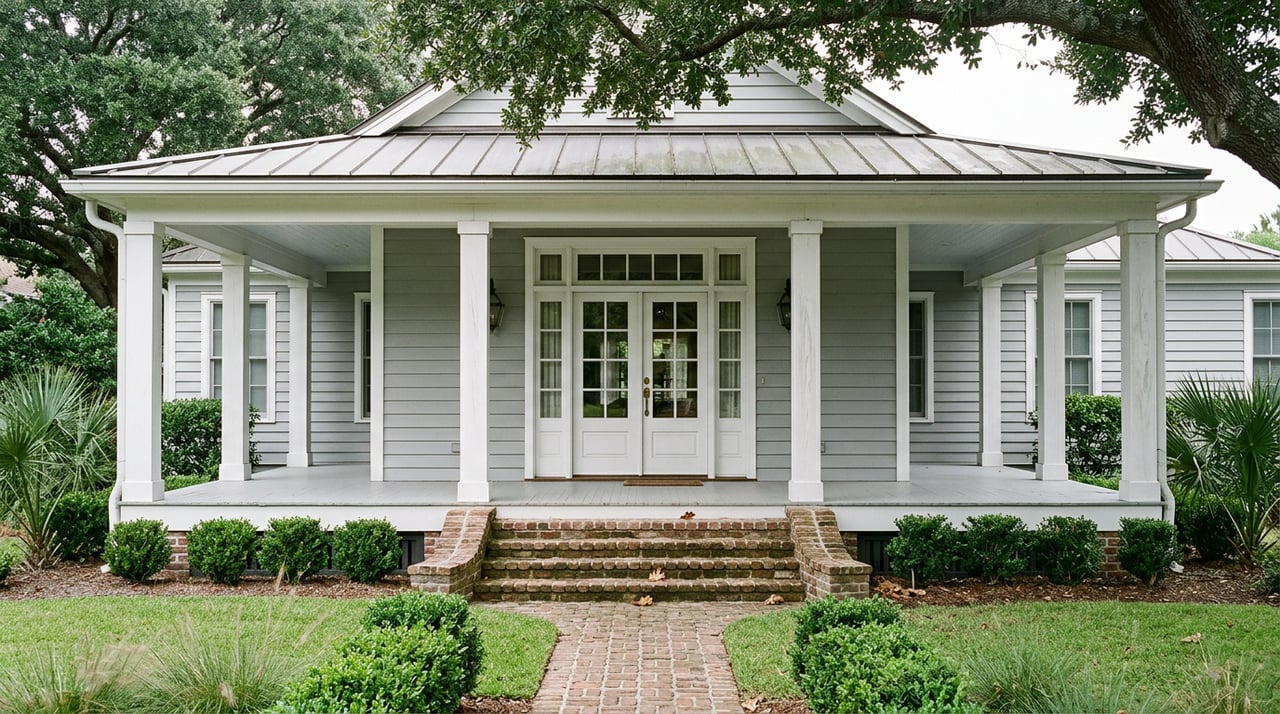
None of this required a single new building. The four houses that anchor this stretch of restaurants were already standing, already carrying the kind of detail, heart pine floors, original mantels, wraparound porches, that nobody builds from scratch anymore because it is not economical to. What changed was the decision to keep using them as gathering places instead of letting them sit as offices or private homes waiting for the next thing.
That is worth noticing if you already live here, because it tells you something about how downtown Summerville is choosing to grow. The town is adding retail and grocery capacity out toward Nexton and Summers Corner. Downtown itself is filling in around what is already there, which means the character of Main Street and the blocks just off it is not disappearing under the growth, it is what is drawing the growth in the first place.
If you have lived here long enough to remember when the Cedar Street Victorian sat quiet, or when the Luke Avenue house was just a house, this fall is a good excuse to go see what it became.
For more on what makes downtown Summerville and the rest of the Charleston area worth paying attention to, Amy Bolan covers the neighborhoods, the openings, and the small changes that add up over time, whether or not a move is anywhere on your mind.